Education
Not all leather is the same animal, the same grade, or the same finish. This guide breaks down everything you need to know to order custom leather goods with confidence — what the grades mean, how tanning works, what makes each hide unique, and how to measure for a perfect fit.
Section One
Walk into any store and you'll find products labeled "genuine leather" or "real leather." These terms are technically true but often misleading. The grade tells you which layer of the hide you're actually getting — and they are not equal.
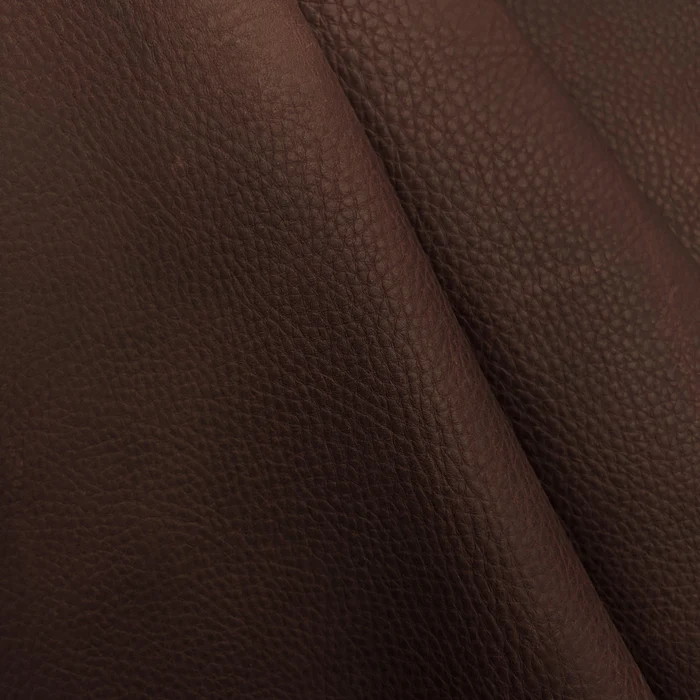
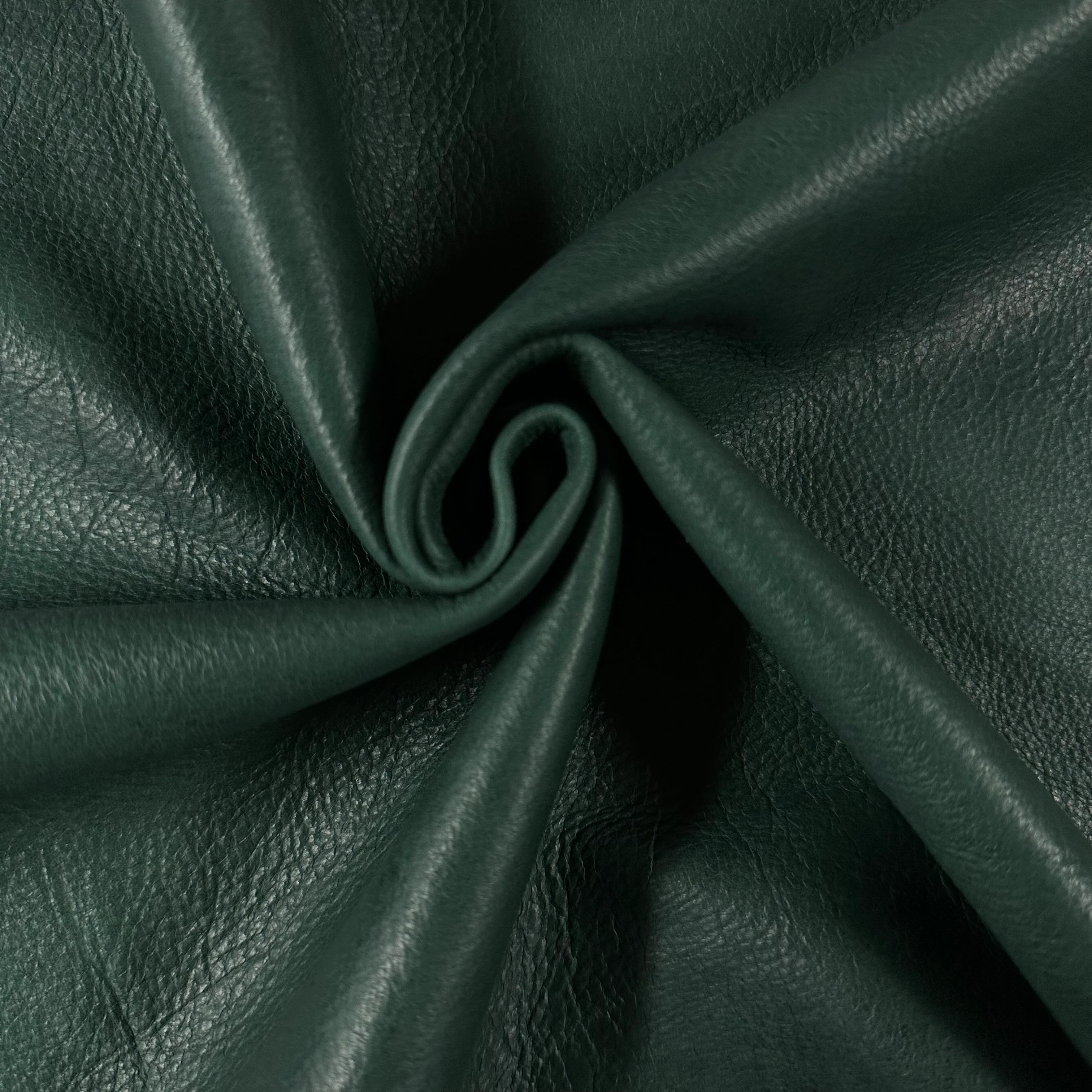
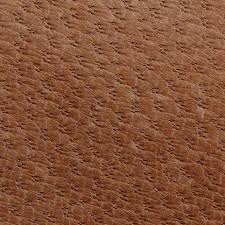
The entire grain surface of the hide is intact. Nothing sanded, buffed, or corrected. Full-grain shows the natural variations, scars, and texture of the animal. It is the strongest, most durable layer of the hide. Over time it develops a patina: darkening at the edges, softening where it flexes, becoming more itself the longer you carry it. This is the only grade worth buying for something meant to last.
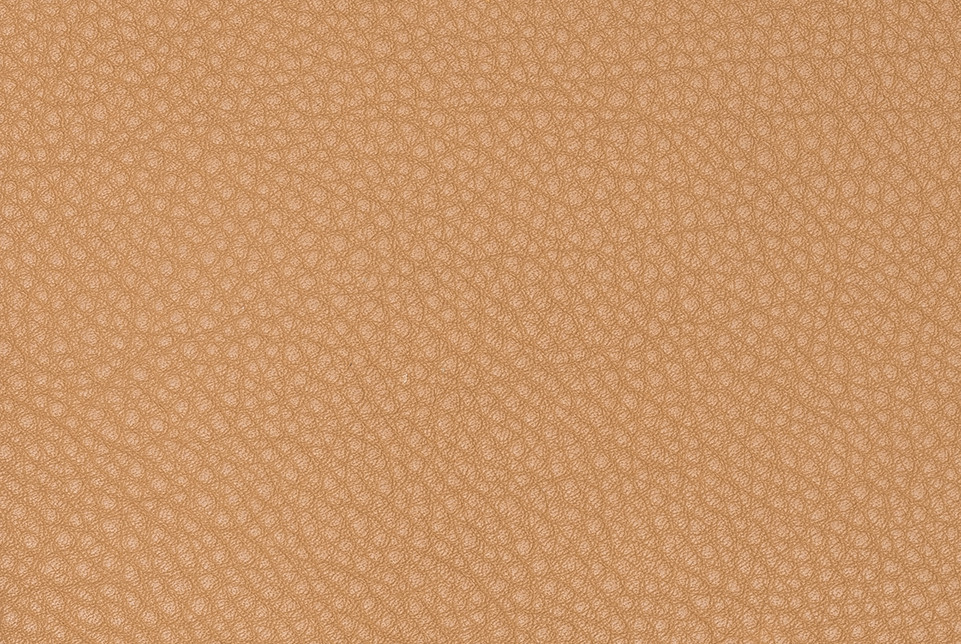
What We UseThe top layer of the hide, but the surface has been sanded or buffed to remove natural imperfections, then coated with a finish. More uniform looking than full-grain, but weaker. It will not develop the same patina — the coating prevents it. Most leather goods at major retailers are top-grain.
Acceptable"Genuine leather" sounds premium but it is actually the industry's lowest grade of real leather. It is made from the leftover layers after full-grain and top-grain are separated off — typically sprayed or laminated to look like leather. It peels, cracks, and wears out quickly. This is what most OEM watch straps are made from.
Avoid for CustomLeather scraps and fiber ground up and bonded with polyurethane onto a backing. Contains as little as 10% actual leather. Peels almost universally within one to three years. If something is labeled "bonded leather" it should be avoided for anything you intend to keep.
AvoidSection Two
Tanning is the process that transforms raw animal hide into leather. The method used determines how the leather ages, how it feels, how it takes dye, and what it is best suited for. These are the two dominant approaches.
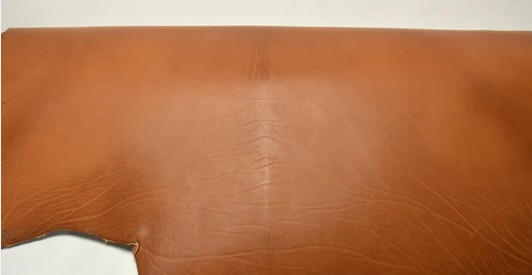
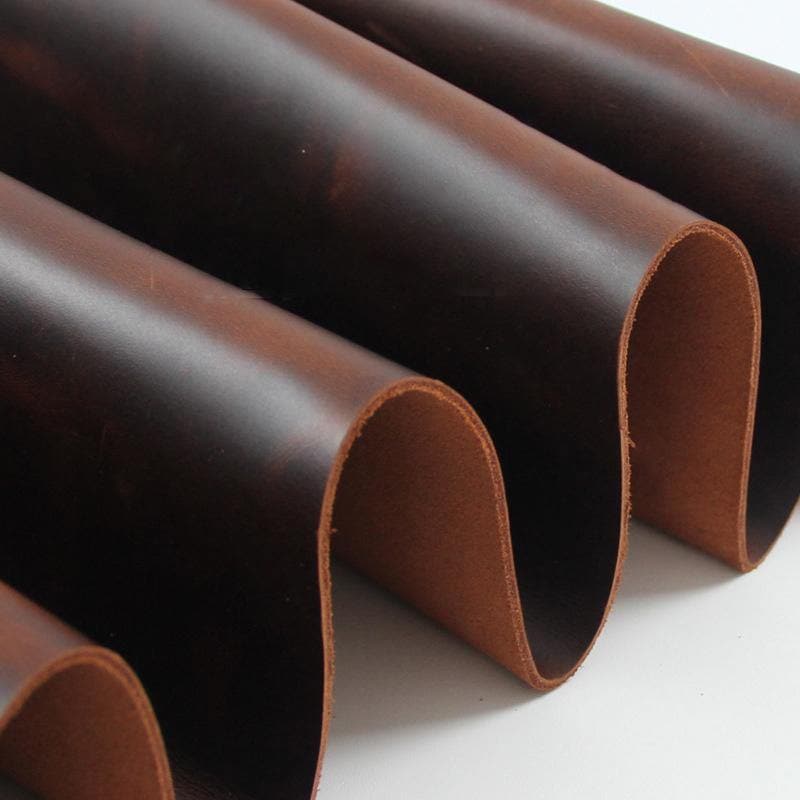
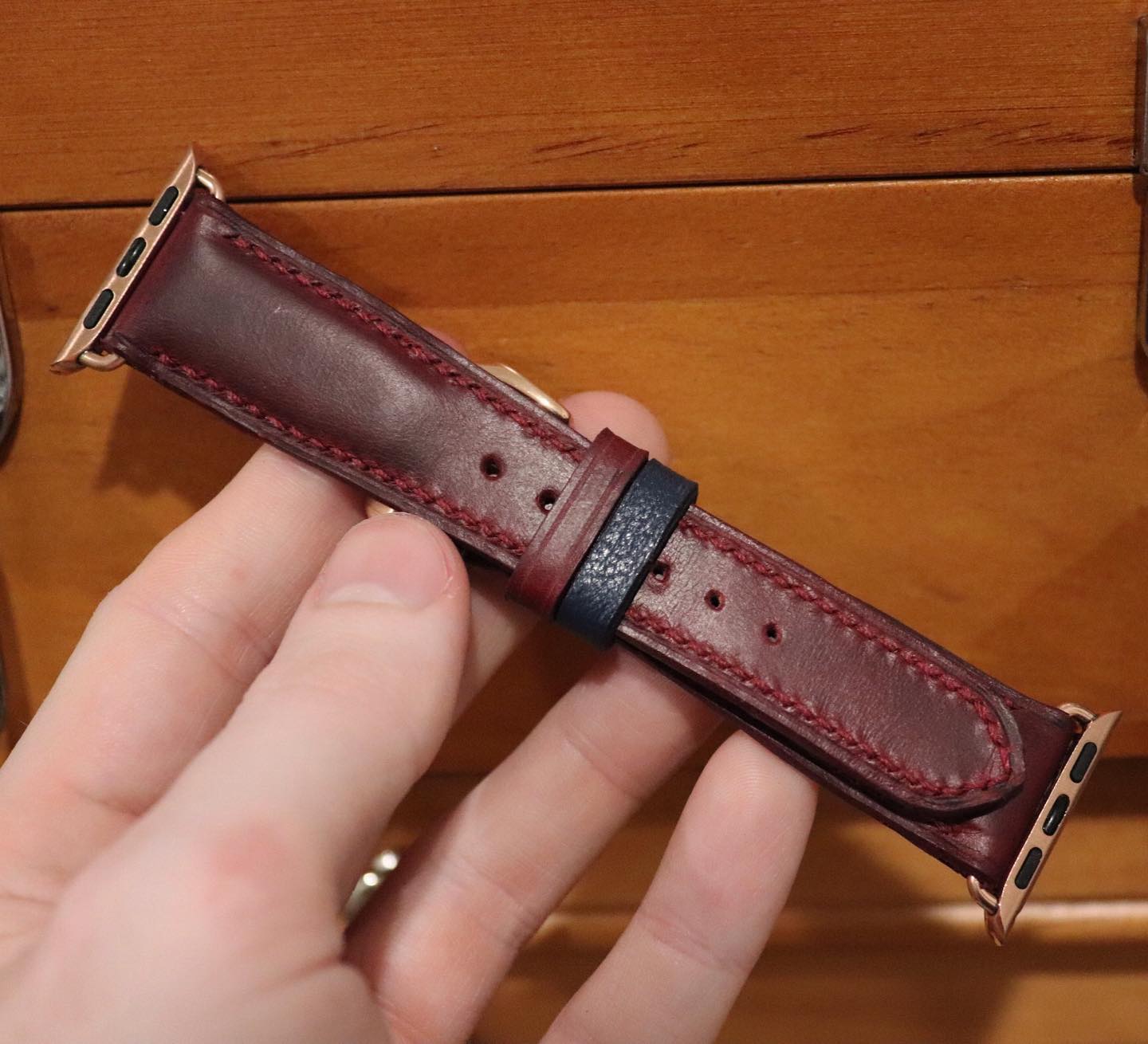
Most Horn Leather Studio pieces use vegetable tanned full-grain leather. For exotic skins, chrome tanning is standard and appropriate — it preserves the texture and color of the hide without fighting the natural surface.
Section Three
These four terms describe how the surface of the leather has been treated after tanning. They are often confused with each other — and with leather grades — but they are separate concepts. The same hide can be finished in completely different ways to produce completely different results.
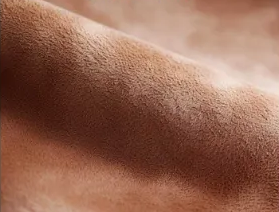
Suede is made from the inner (flesh) side of the hide, buffed and raised into a soft, velvety nap. It can come from any animal — cow, deer, lamb, pig. Suede is soft and looks luxurious, but because it is the weaker inner layer, it is less durable than full-grain and much more absorbent. It requires more maintenance and is not a good choice for pieces that will see heavy daily wear or wet conditions.
Confused with: Nubuck. Key difference: suede is the flesh side. Nubuck is the grain side.
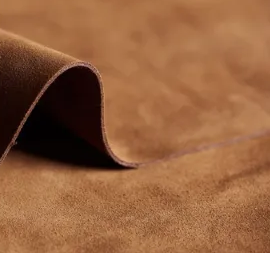
Nubuck is full-grain leather (the strong outer surface) that has been lightly sanded or buffed to create a soft, velvety texture similar to suede. Because it comes from the grain side — the outer layer of the hide — it is significantly more durable than suede. It looks similar to suede but is a premium product by comparison. It still requires care to avoid water staining and scuffing.
Confused with: Suede. Key difference: nubuck is the grain side — stronger, more durable, more expensive.
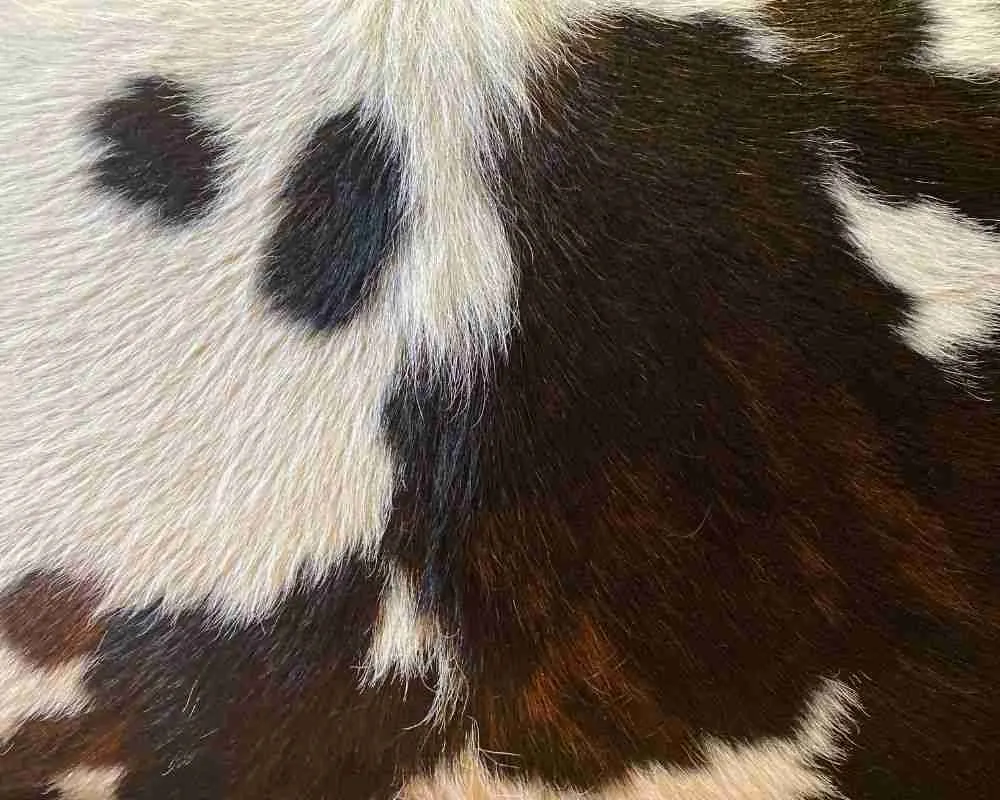
Hair-on leather (also called hair-on hide or cowhide rug leather) is the full hide tanned with the natural fur or hair left in place. Cowhide, calf, pony, and zebra prints are the most common. Used for accent pieces, bags, boots, and statement accessories. The hair side is the exterior finish — the leather side is the backing. Durable, distinctive, and immediately recognizable.
Best for: decorative panels, bags, western-style accessories, rugs. Not ideal for high-wear edges or watch straps.
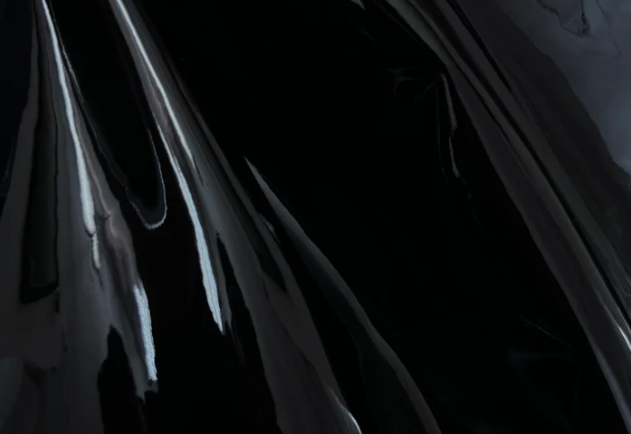
Patent leather is leather (or sometimes synthetic) coated with a high-gloss lacquer or polymer finish. The signature mirror shine is the coating, not the leather itself. Patent leather is dressy and formal, associated with dress shoes and evening bags. It does not breathe, does not develop patina, and shows fingerprints and fine scratches easily. The leather underneath is typically top-grain or genuine leather — the coating is the product.
Key point: the shine is a coating. Patent leather does not age or improve with wear the way natural leather does.
Section Four
Cattle produce the most widely used leather in the world — but not all bovine leather is the same animal, the same age, or the same cut. The part of the hide matters as much as the animal it came from.
The center of the back running from shoulder to rump. The tightest, most consistent grain on the animal. Highest fiber density means greatest strength and durability. Best for: belts, watch straps, wallets, holsters. What most serious leatherworkers specify when quality matters most.
The front quarter of the hide. Slightly more grain variation than the bend due to the animal's movement. Still excellent quality leather. Best for: bags, straps, casual belts, and larger cut pieces where some grain variation is acceptable or desirable.
The rear of the hide. Dense and firm with tight grain. Also the source of Shell Cordovan on horses — the equine equivalent is the most prized cut. On cattle it produces sturdy, reliable leather. Best for: heavy goods, soles, structural pieces.
The underside of the animal. The loosest, most fibrous part of the hide. More stretch and irregularity than the back. Lower durability for structural pieces. Best for: lining, soft accessories, pieces where pliability is more important than strength.
The neck area has more wrinkle and roll in the grain from the animal's natural movement. Thicker than the belly but with more natural character marks. Best for: rustic goods, tooling leather, pieces where natural variation is part of the aesthetic.
Same species group, very different leather. Age, breed, and diet all affect the grain tightness, thickness, and softness of the resulting hide.
Section Five
Horse leather is among the most storied in the craft. Two very different products come from the same animal — the full hide and the prized Shell Cordovan membrane from the rump.
Section Six
Deer, elk, sheep, and kangaroo produce leathers that are fundamentally different from bovine. They tend to be lighter, softer, and more supple from the start — less about durability and more about comfort, feel, and uniqueness.
Section Seven
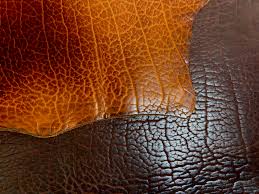
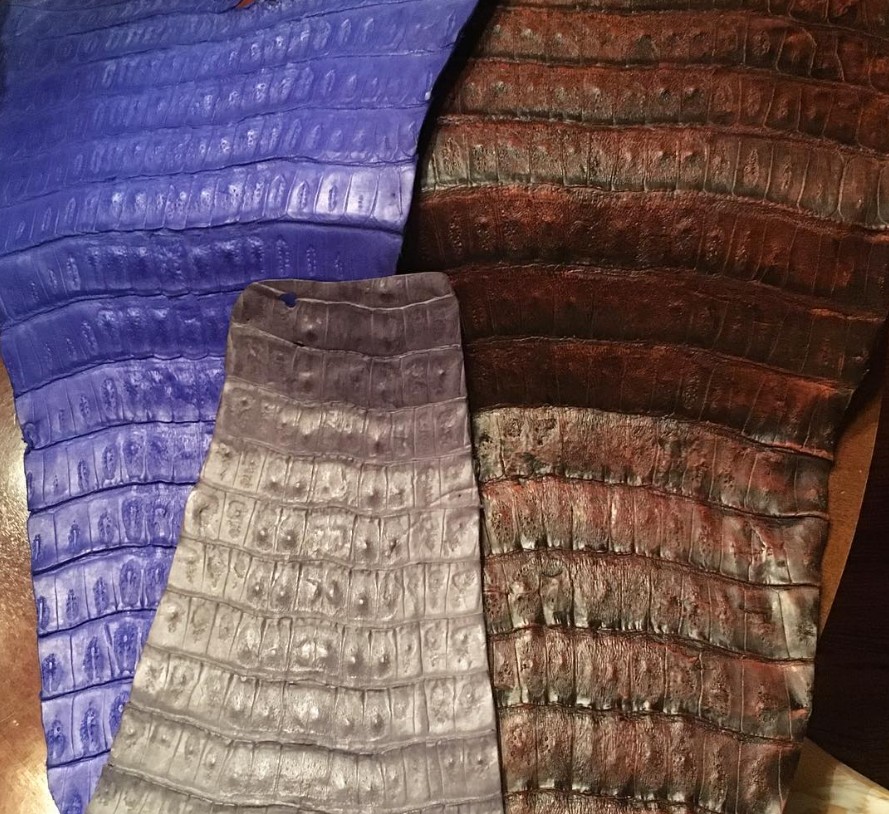
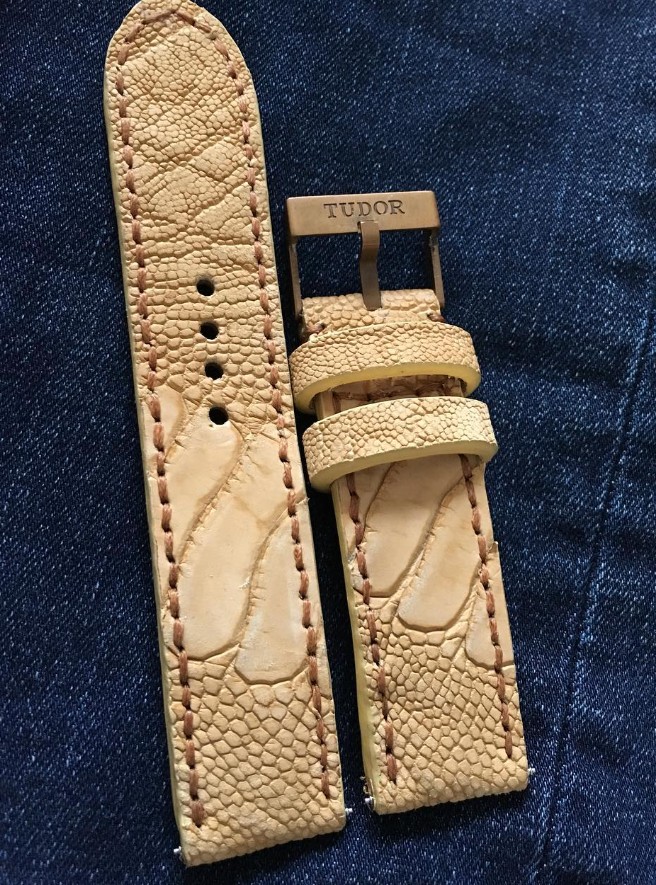
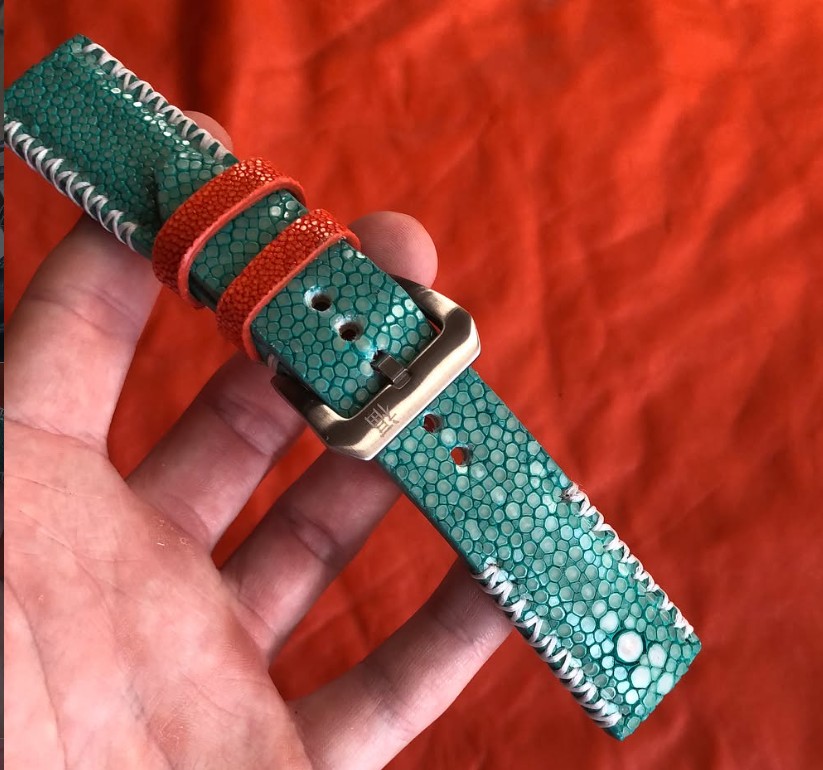
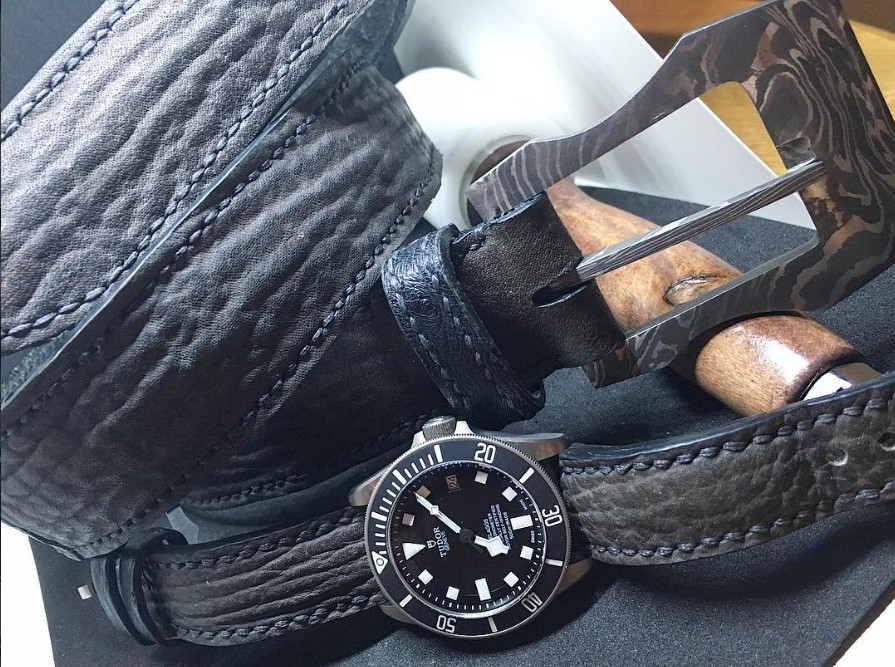
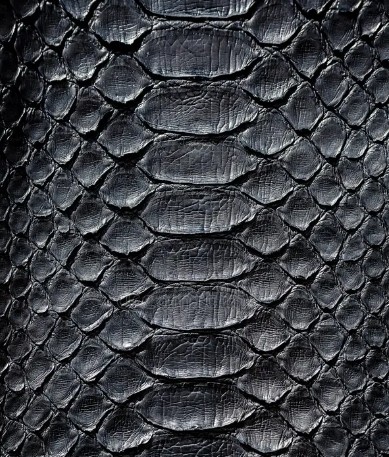
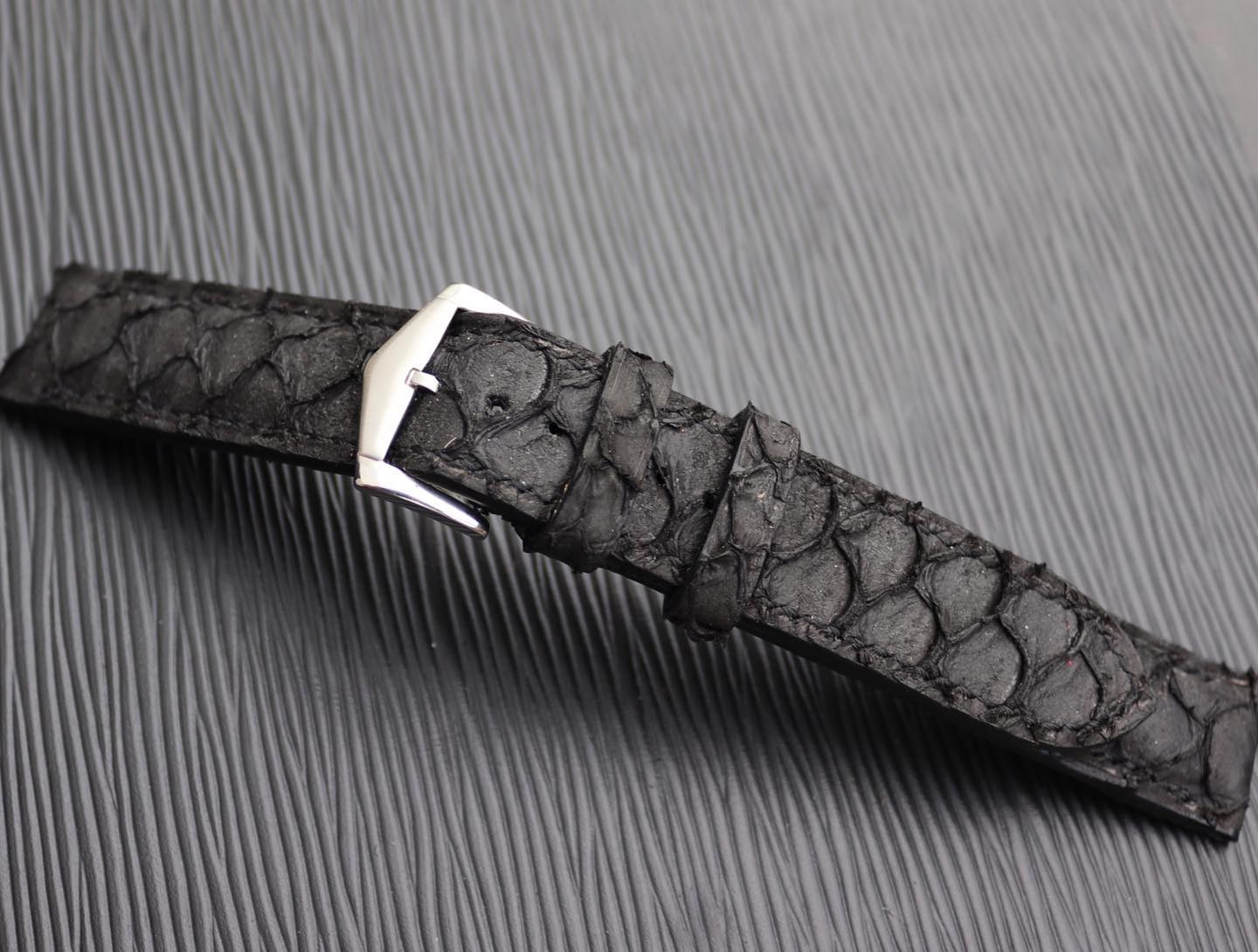
Exotic skins are defined by their visual distinctiveness — scales, beads, quills, and patterns that no bovine or game hide can replicate. Each has a unique texture, weight, and character. All of the following are in stock or sourceable within a short lead time.
A note on "In stock" vs "On request": In stock means we have the hide on hand and can begin your piece immediately. On request means we can source it within a short lead time — typically one to two weeks. Either way, reach out and we will confirm before you order.
Section Eight
Getting the right size for a custom order makes all the difference. Here is how to measure for each product type so your piece fits perfectly from day one.
Strap Anatomy
Measure the gap between the lugs on your watch case with a mm ruler or calipers. This is the most important number — the strap must fit exactly. Common sizes: 18, 19, 20, 21, 22, 24mm.
Wrap a tape measure snugly around your wrist where you wear your watch. Write this in mm. S wrist: 145 to 170mm. M wrist: 165 to 190mm. L wrist: 185 to 210mm.
Measure your current long strap piece (lug to tip) and short strap piece (lug to buckle end) and add them together. Match that total to our S, M, or L. S = 170mm total. M = 185mm total. L = 205mm total.
The buckle end (B) is typically narrower than the lug end (A). Common tapers: 20/18mm, 22/20mm, 24/22mm. Tell us your existing buckle width and we will match it.
Pin buckle or deployment clasp? Thread color? Padding thickness? Lining yes or no? Vintage lug fitment? The more you share, the better the fit.
| Size | Wrist | Long (C) | Short (D) |
|---|---|---|---|
| S | 145 to 170mm | 105mm | 65mm |
| M | 165 to 190mm | 115mm | 70mm |
| L | 185 to 210mm | 125mm | 75mm |
| Custom | Any | Your spec | Your spec |
| Watch Brand | Lug Width |
|---|---|
| Rolex Submariner, Datejust | 20mm |
| Rolex Daytona | 20mm |
| Omega Seamaster 300m | 22mm |
| Omega Speedmaster | 20mm |
| Panerai Luminor 44mm | 24mm |
| Panerai Luminor 42mm | 22mm |
| Breitling Navitimer | 22mm |
| Seiko SKX / SRPD | 22mm |
| Nomos Metro / Tangente | 18 or 20mm |
| Apple Watch 38/40/41mm | 38mm case |
| Apple Watch 42/44/45mm | 42mm case |
| Tudor Black Bay | 22mm |
Between sizes or unsure? Send a photo of your watch on your wrist and we will figure out the exact spec before you order. Custom lengths are always available at no extra charge.
How Belt Size is Measured
Your belt size = the distance from point A (the fold where the leather meets the buckle) to point B (the hole you actually use). This is the most accurate method — more reliable than pants size.
Find a belt that fits you well. Measure from the fold (where the leather meets the buckle — point A) to the hole you use most (point B). That measurement in inches is your belt size. This is always more accurate than pants size.
Wrap a tape measure around your waist where you wear your belt, threading it through your belt loops. Add 1 to 2 inches to that number. If your waist measures 34 inches, order a 36-inch belt so the center hole is your wear hole.
1 inch: dress belts and slim trousers. 1.25 inch: versatile everyday. 1.5 inch: standard western and casual. 1.75 inch: heavy-duty and western. Check your belt loops — they should comfortably accommodate your chosen width.
If you are supplying your own buckle, measure the interior opening of the buckle bar in inches. It must match your belt width exactly for a clean fit and proper function.
| Pants Size | Typical Belt Size |
|---|---|
| 28 | 30" |
| 30 | 32" |
| 32 | 34" |
| 34 | 36" |
| 36 | 38" |
| 38 | 40" |
| 40 | 42" |
| 42 | 44" |
| 44 | 46" |
Pants size is a guideline only. Measuring an existing belt is always more accurate. When in doubt, go up one size — it is easier to add holes than to shorten a belt that is too short.
How many cards do you actually carry daily? A wallet built for 4 cards and stuffed with 10 will break down faster. Be honest — we will build the right count in.
Bifold wallets fold bills once. Some prefer a separate cash sleeve. If you rarely carry cash a card-only slim wallet may be the right choice.
A coin compartment adds thickness. If you carry coins we can build in a zipper or snap section. If not, leaving it out keeps the profile slim.
Do you want the slimmest possible profile for front pocket carry, or are you comfortable with a traditional bifold? This affects construction and leather weight.
| Type | Best For | Cards |
|---|---|---|
| Slim card holder | Front pocket, minimalist | 2 to 4 |
| Bifold | Back pocket, traditional | 4 to 8 |
| Trifold | Maximum storage | 8 to 12 |
| Long / continental | Passport, flat bills | 4 to 8 |
| Money clip | Ultra minimal | 1 to 3 |
Standard credit cards are 85.6mm x 54mm. All card slots are built to this standard unless you specify otherwise.
Use a flexible tape measure around the base of the neck where the collar sits. You should be able to fit two fingers between the tape and the neck. Note in inches.
We build collars with 5 holes spaced 1 inch apart, centered on your neck measurement. This gives 2 inches of adjustment in either direction for weight changes or seasonal coat variation.
Small dogs under 25 lbs: 5/8 to 3/4 inch. Medium dogs 25 to 60 lbs: 3/4 to 1 inch. Large dogs 60 lbs plus: 1 to 1.5 inch. Working or pulling dogs: 1.5 to 2 inch.
Quick-release buckles for everyday use. Traditional roller buckles for longevity and a cleaner look. D-ring size should match your leash clip. Tell us your dog's breed and we will recommend the right hardware weight.
| Dog Size | Neck Range | Width |
|---|---|---|
| Extra Small (under 10 lbs) | 6" to 10" | 5/8" |
| Small (10 to 25 lbs) | 9" to 14" | 3/4" |
| Medium (25 to 60 lbs) | 13" to 18" | 1" |
| Large (60 to 100 lbs) | 16" to 24" | 1 to 1.5" |
| Extra Large (100 lbs plus) | 20" to 28" | 1.5 to 2" |
Always measure your dog's actual neck rather than going by breed alone. If your dog is still growing, tell us the breed and age and we will build in extra adjustment range.
Now that you know what you are looking for, let us build it. Message on Etsy with your measurements and material preference and we will take it from there.
Start a Custom Order on Etsy Back to Horn Leather Studio